Global supply chains are the invisible engines of the world economy. They move food, clothing, electronics, and raw materials across continents, linking farms, factories, ports, and consumers. But they also carry a heavy climate cost. Transportation, manufacturing, packaging, and storage together account for more than 60 percent of global emissions. As climate change accelerates, decarbonizing supply chains is no longer optional. It is the next frontier of climate action.
Sustainable supply chains aim to reduce emissions at every stage of production, from the soil where crops grow to the factories that assemble products. This transformation requires cleaner energy, smarter logistics, circular design, and transparent reporting. The shift is complex, but the payoff is enormous: lower emissions, resilient businesses, and a healthier planet.
Sustainable Sourcing: Starting at the Farm
The journey toward decarbonization begins long before a product reaches a factory. Agriculture, mining, and raw material extraction are often the most carbon‑intensive stages of a supply chain.
Key strategies include:
- Regenerative agriculture to restore soil and reduce fertilizer emissions
- Deforestation‑free sourcing for commodities like palm oil, cocoa, and soy
- Traceability systems that track materials from origin to shelf
- Fair labor and ethical sourcing to ensure sustainability includes people, not just carbon
Companies that invest in sustainable sourcing reduce climate risk while strengthening long‑term supply stability.

Photograph by Land O’Lakes, Inc.
Cleaner Manufacturing: Factories Powered by Clean Energy
Manufacturing is responsible for nearly one‑third of global emissions. Decarbonizing factories requires a shift toward Clean Energy, electrification, and efficiency.
Climate‑smart manufacturing includes:
- Switching to renewable electricity for operations
- Electrifying heat processes where possible
- Using low‑carbon materials such as green steel and recycled aluminum
- Deploying energy‑efficient machinery and automation
- Implementing circular design to reduce waste
Companies like Apple, IKEA, and Unilever are already pushing suppliers to adopt renewable energy and report emissions transparently.
Low‑Carbon Logistics: Rethinking Transport and Distribution
Transport is one of the hardest parts of the supply chain to decarbonize. Ships, trucks, and planes still rely heavily on fossil fuels.
Solutions include:
- Electric trucks for short‑haul routes
- Green shipping fuels such as ammonia and methanol
- Rail over road to reduce emissions
- Optimized routing and load planning to cut unnecessary trips
- Urban micro‑hubs for last‑mile delivery
Digital tools like AI‑based logistics planning can reduce fuel use by up to 20 percent.
Circular Supply Chains: Designing Out Waste
A sustainable supply chain is not linear. It is circular.
Circularity means:
- Designing products for repair, reuse, and recycling
- Using recycled materials instead of virgin resources
- Creating reverse logistics systems to take products back
- Reducing packaging and switching to compostable or recyclable materials
Circular supply chains reduce emissions, cut costs, and keep materials in use longer.
Transparency and Reporting: The Backbone of Decarbonization
You cannot reduce what you cannot measure. Transparent reporting is essential for sustainable supply chains.
This includes:
- Scope 1, 2, and 3 emissions reporting
- Supplier scorecards and sustainability audits
- Blockchain‑based tracking for high‑risk commodities
- Public sustainability commitments and progress updates
Governments are also stepping in. The EU’s Corporate Sustainability Reporting Directive (CSRD) and similar policies worldwide are making supply chain transparency mandatory.
Decarbonizing global supply chains is one of the most powerful climate actions of the decade. From sustainable sourcing and Clean Energy manufacturing to low‑carbon logistics and circular design, every step offers an opportunity to cut emissions and build resilience. The companies that lead this transition will shape the future of global trade and help secure a livable planet for generations to come.
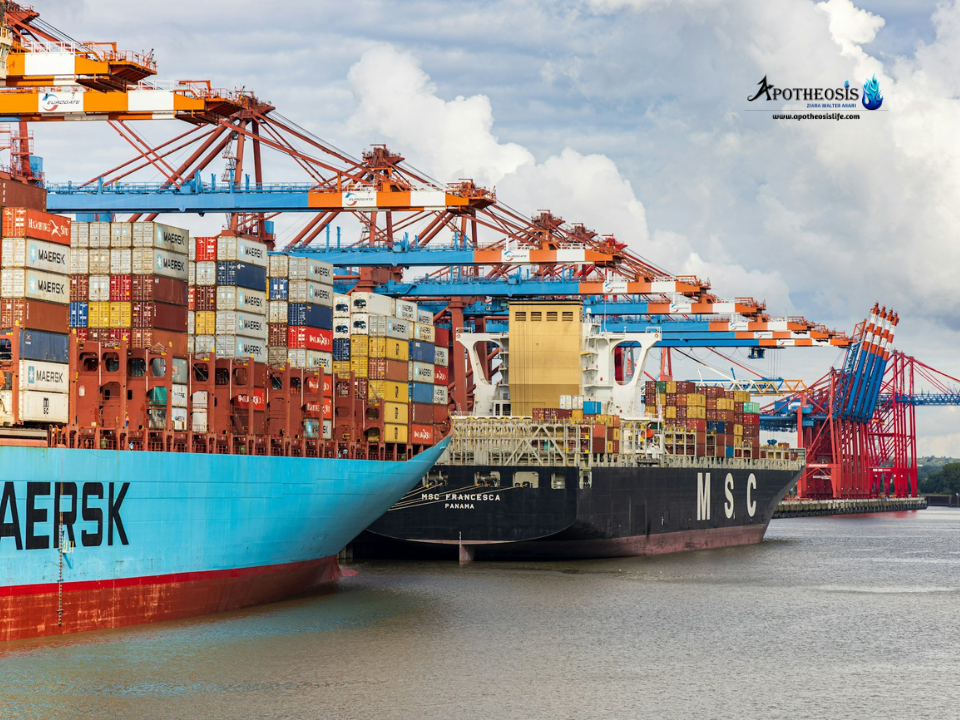
Details of the Featured Image
- Title: Global Shipping at the Heart of Sustainable Supply Chains
- Caption: Cargo ships and cranes at a busy port, representing the global logistics networks driving today’s supply chains.
- Description: A large container port with two cargo ships docked side by side, surrounded by towering cranes and stacks of multicolored containers. The scene captures the scale and complexity of global logistics, highlighting how maritime transport plays a central role in modern supply chains and the growing push to decarbonize them through cleaner fuels, smarter routing, and sustainable operations.
- Photograph by Dominik Lückmann
Author
Ziara Lakshyā Akari
Copyright © 2025 www.apotheosislife.com