The world is at a turning point. As climate change accelerates, nations are racing to replace fossil fuels with clean energy solutions that are more sustainable and resilient. Solar, wind, and emerging technologies like green hydrogen are no longer niche experiments. They have become central pillars of the global transition to clean energy
Solar Power: Scaling at Record Speed
Solar energy has become the backbone of renewable expansion.
Cost declines: Solar panel prices have dropped by more than 80% in the past decade, making them competitive with coal and gas.
Global adoption: Countries like India, China, and the U.S. are leading large scale solar deployments, with India’s solar parks among the largest in the world.
Innovation: Advances in perovskite solar cells and bifacial panels promise even higher efficiency.
Solar is now the fastest growing renewable technology, projected to dominate electricity generation growth by 2030.
Wind Energy: Harnessing Air Currents
Wind power complements solar by providing energy at different times and conditions.
Onshore wind: Already widespread in Europe, North America, and Asia.
Offshore wind: Emerging as a game changer, with floating turbines enabling deployment in deeper waters.
Challenges: Grid integration and land use remain hurdles, but policy support is strong.
By 2025, wind is expected to supply nearly 20% of Europe’s electricity.
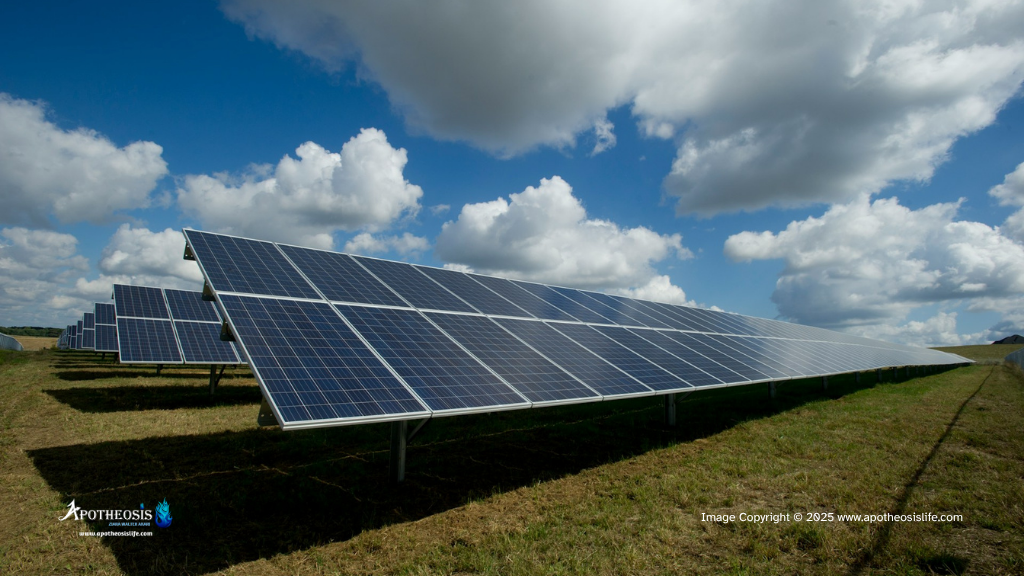
A large scale solar installation that reflects the future of responsible energy and long term environmental planning.
Photograph by American Public Power Association
Green Hydrogen: The Next Frontier
While solar and wind dominate electricity, green hydrogen is emerging as a solution for sectors that are hard to electrify such as steel, cement, shipping, and aviation.
Production: Made by splitting water using renewable electricity.
Global push: The EU, Japan, and Australia are investing heavily in hydrogen infrastructure.
Potential: Could replace fossil fuels in heavy industry and long distance transport.
The World Economic Forum notes that hydrogen could reshape global energy systems if costs fall and infrastructure scales.
Policy and Investment Drivers
The energy transition is not just technological. It is political and financial.
Policy frameworks: Carbon pricing, renewable subsidies, and net zero pledges are accelerating adoption.
Private investment: Clean energy attracted over 1.7 trillion dollars in 2023, surpassing fossil fuel investments.
Geopolitical shifts: Nations are competing for leadership in clean tech manufacturing, from solar panels to hydrogen electrolyzers.
Challenges Ahead
Despite progress, obstacles remain.
Grid modernization: Integrating variable renewables requires smarter, more resilient grids.
Storage: Battery technology must scale to balance intermittent supply.
Equity: Developing nations need financing to avoid being left behind in the clean energy race.
The global race for clean energy is reshaping economies, geopolitics, and daily life. Solar and wind are scaling rapidly, while green hydrogen promises breakthroughs in hard to decarbonize sectors. The transition beyond fossil fuels is no longer optional. It is the defining challenge of our era. Nations that lead will not only cut emissions but also secure economic resilience in a warming world.
Details of the Featured Image
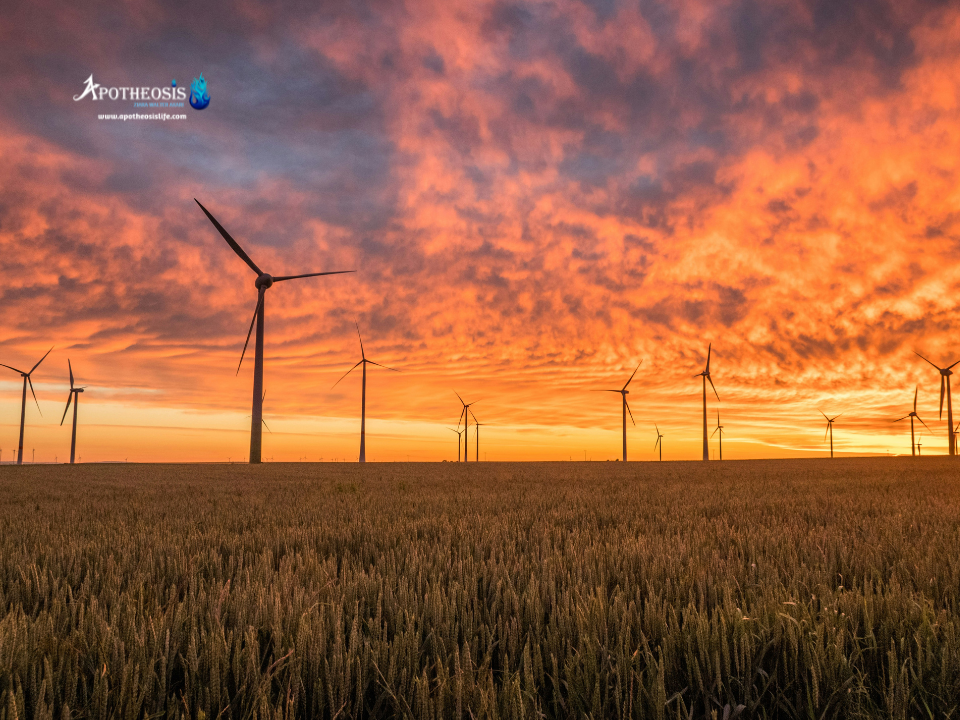
– Title: Wind Turbines Powering a Clean Energy Future
– Caption: Wind turbines turning across open farmland during sunset, symbolizing the global shift toward Clean Energy
– Description: A wide landscape view of tall wind turbines standing across a field at sunset. The sky glows with warm orange and red tones, creating a dramatic backdrop that highlights the scale and beauty of renewable energy infrastructure. This image reflects the growing global commitment to Clean Energy and the integration of wind power into modern energy systems.
Photograph by Karsten Würth
Author
Ziara Lakshyā Akari
Copyright © 2025 www.apotheosislife.com
Great content! Keep up the good work!
Thank you so much! 🙏🏻
Means a lot! 😊